

The Good Hack Team Spotlight: Best Cultural & Regional Scalability, CareMaps
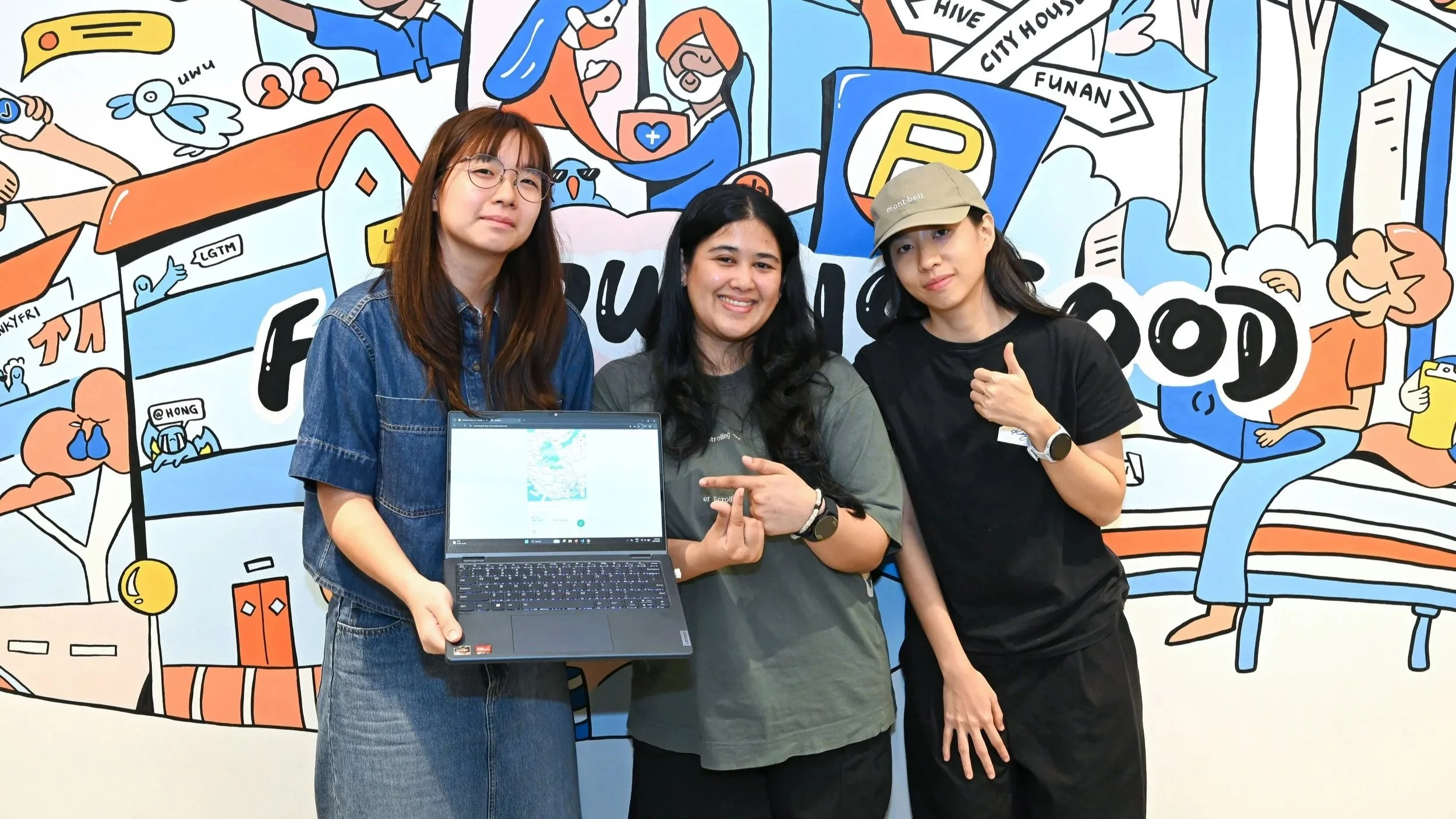
CareMaps; from left to right: Goh Jing Wen, Pradnya Nirgun, Kay
We recently partnered with Open Government Products to run The Good Hack — a Tech for Public Good hackathon as part of the Build for Good Stewards programme. This year's hackathon focused on helping the ageing society in Singapore and Southeast Asia — specifically on better supporting caregivers and the elderly ecosystem of operators and non-profit organisations.
Some of our teams managed to clinch awards and won hearts from judges and the audience. Let’s hear from CareMaps, the team who brought home the Best Cultural & Regional Scalability award!
1. Pick a food item to describe CareMaps and tell us why.
We each had our own answer, chendol for the richness and diversity of thought or pizza for the way different ingredients come together into something greater. But if we had to pick just one, we'd go with a macaron.
A macaron needs the perfect conditions and just the right amount of time to become what it's meant to be. Too rushed, and it falls flat. That's how we approached CareMaps. Before jumping to solutions, we made sure we were solving the right problem, focusing on the insights and pain points that actually mattered to our users. Getting that foundation right made everything else possible.
2. Who does your solution help and what challenge does it tackle?
CareMaps is designed for seniors, caregivers, and persons with disabilities. Most navigation apps are built around speed which gets you from A to B as fast as possible. But for these groups, what matters most isn't speed. It's safety and accessibility. CareMaps reimagines navigation by prioritising the safest route over the fastest one, reducing the planning burden on caregivers and giving seniors greater independence in their everyday journeys.
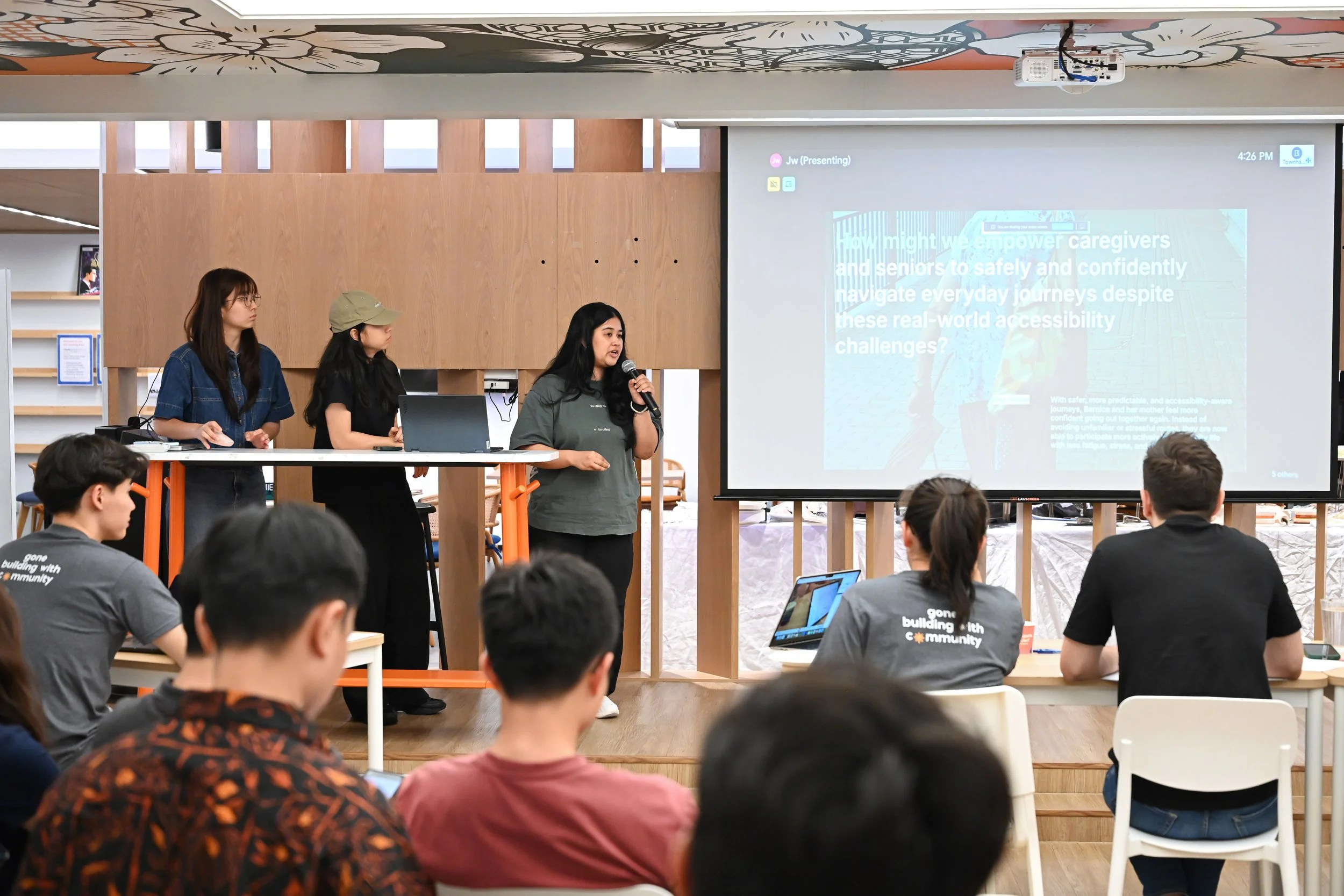
Presenting to the judges
3. How does your solution help to tackle this problem?
By putting accessibility at the centre of the experience. Rather than relying on the usual variables used to optimise for speed, CareMaps looks at different data entirely. Things like slope gradients and the number of zebra crossings along a route. These insights shape route recommendations that are genuinely tailored to the needs of its users, simplifying decision-making and adding convenience to everyday walks. It makes journeys safer and less stressful.
The goal is simple: to make getting from place to place feel less like a challenge and more like something anyone can do with confidence.
4. What was the biggest challenge your team overcame during the hackathon?
Two things: time and access to users.
We initially had a few ideas with many features they wanted to build, but the hackathon format meant making tough calls about what to prioritise. We focused on demonstrating the core user journey effectively, even if it meant leaving some features and screens on the cutting room floor. At the same time, we needed to speak to the people we were building for, and making sure their needs were genuinely heard within such a tight timeframe. It was its own challenge. Both pushed the team to validate quickly, focus on what mattered most, and collaborate well under pressure.
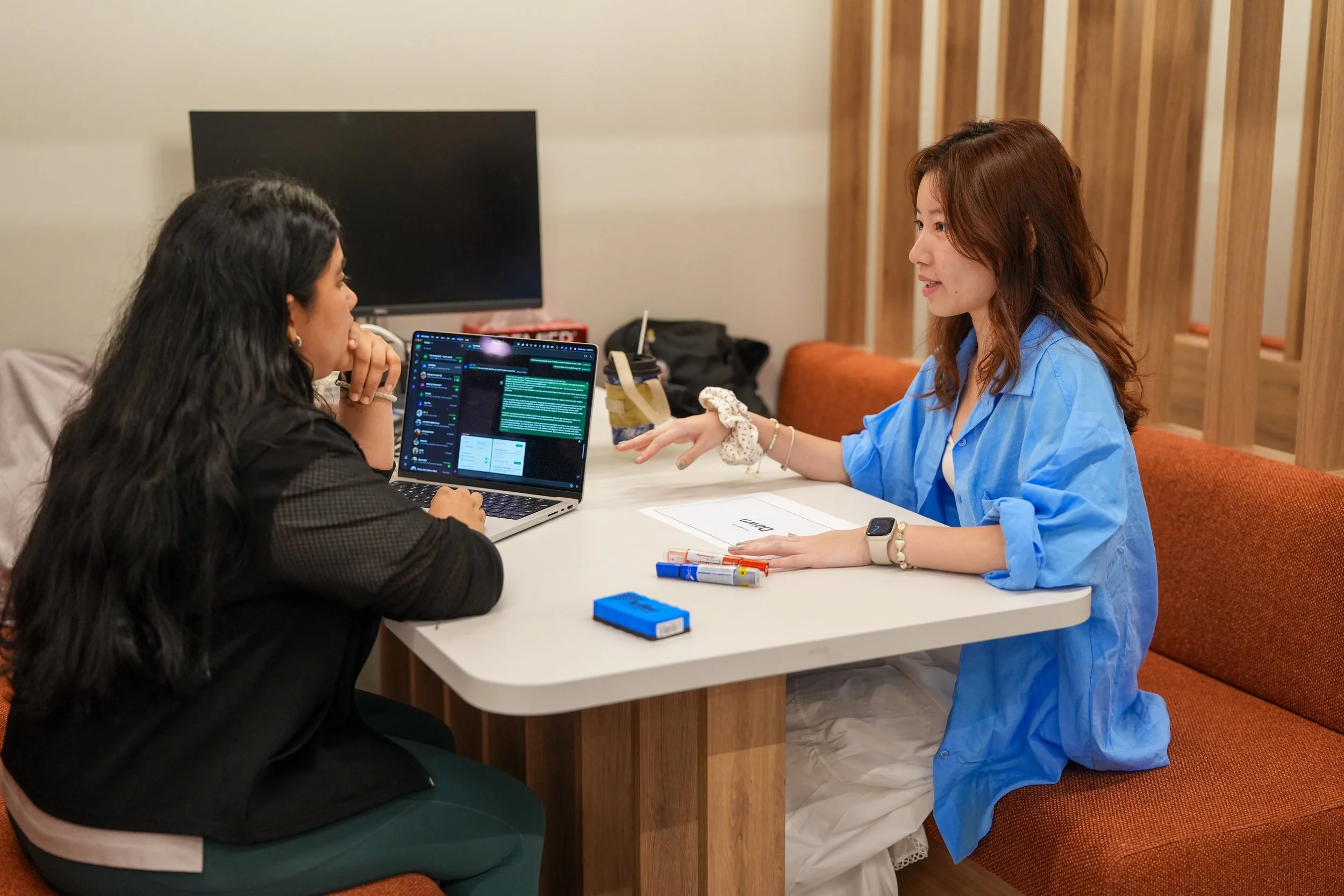
Deep in conversation with our mentor